Tim and I try to follow permaculture principles. Permaculture or Permanent Agriculture/Culture has been defined in many different ways but essentially it:
"tackles how to grow food, build houses and create communities, and minimise environmental impact at the same time. Its principles are being constantly developed and refined by people throughout the world in very different climates and cultural circumstances."
Our goats are a good illustration of how you can get multiple outputs from one element in a well designed system.
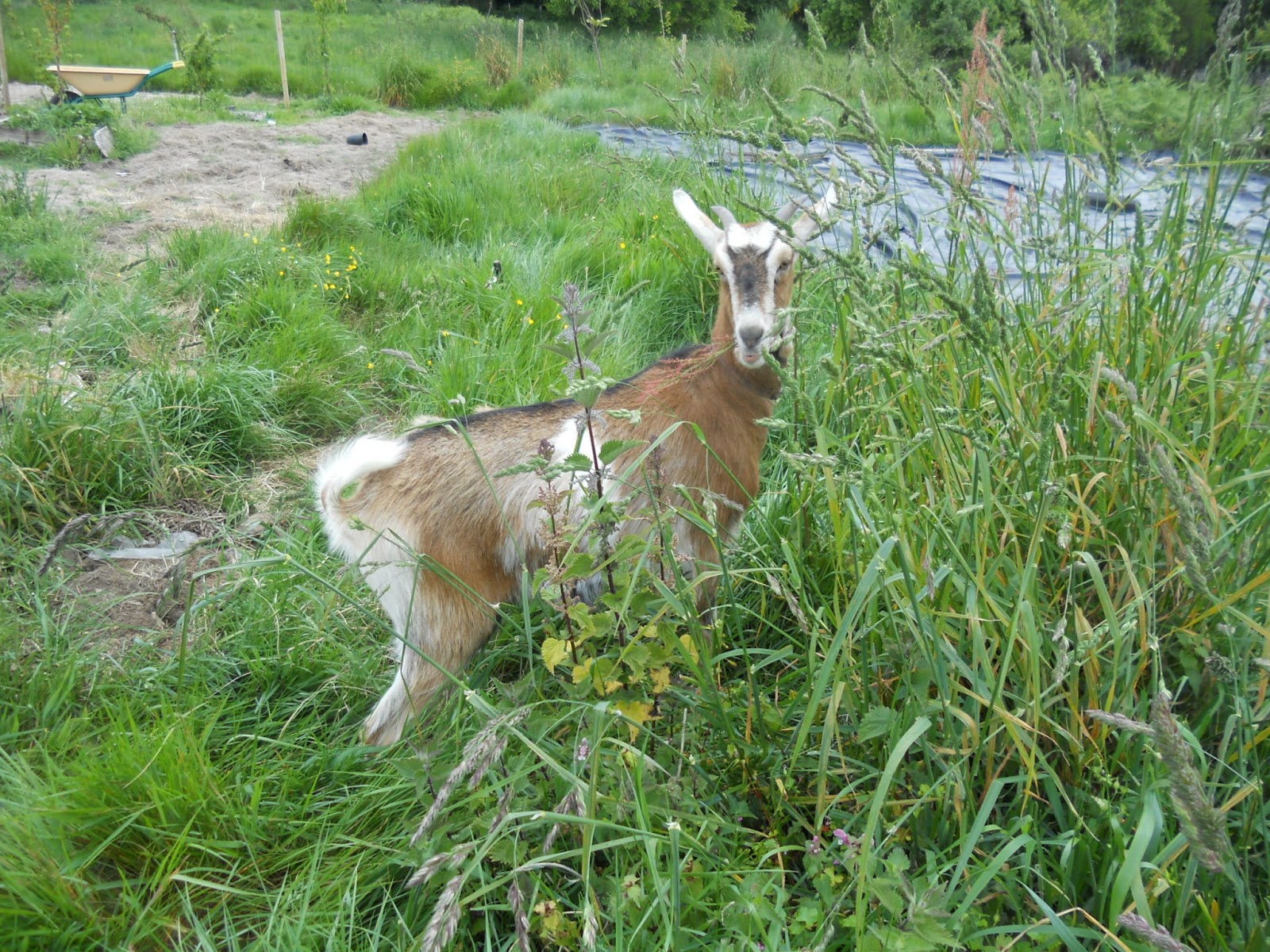
Food costs are very low as apart from small amounts of bought in maize and barley they are fed from our land. They eat all of the rough grazing, brambles and ivy and some vegetable garden waste saving us the effort of scything. In the future I hope to grow food crops for all of our animals so the bought in grain input will no longer be required.
Catherine and I have just spent a few days making hay the traditional way, scything the grass, turning it by hand and gathering and storing the dry results. We should now have enough to last through any bad summer weather and the period immediately after the delivery of their kids.
We use their manure to fertilize the vegetable garden and all being well we should get some milk from them to be made into yoghurt cheese and ice cream as well as delicious meat from any male kids. Once we have enough goats we can always sell any excess female kids once they are old enough, to give us much needed cash.
They also provide us with endless entertainment and some of my best memories involve walking the goats around the Galician lanes on sunny afternoons and sitting on warm grass filled with wild flowers, dreaming the afternoon away, whilst they eat their way through the nearest bush or tree.
What's not to like?
Thoughts from our smallholding in the province of Lugo, Galicia, in the north-west of Spain.
Thursday, 6 June 2013
Tuesday, 14 May 2013
Lush Growth
At last I am making more progress on the land with mother nature doing most of the work. My runner beans are up and starting to climb, for once I appear to have parsnip seedlings, slugs are on the move but I am hoping that some plants will survive the onslaught. Lettuces and herbs have continued to crop throughout the winter and garlic is slowly making progress. Peas are shooting up but no sign of the asparagus crowns that I planted over winter.
The red currents are looking promising although they were transplanted this winter, the copious rain seems to have revitalised them. It seems to have suited the other currents and immature gooseberries are in abundance. The weather at the moment is hugely variable, hot and sunny one day, dull and cold the next but the use of my hosepipe extension is helping seeds germinate and transplants establish.
This year I am trying straw mulches around suitable plants to try to conserve water and improve the soil. Yesterday was very hot and whilst planting young basil plants between my tomatoes in an old builders sack, in our south facing courtyard, it was amazing how much difference there was between the surface of the straw and the cool moist soil beneath.
The lemon tree continues to thrive, the largest lemon has been hanging on the tree for nearly a year now and will soon be ripe enough to pick, meanwhile the tree continues to flower profusely and is covered in more lemons in varying stages of development.
The comfrey is just coming into flower, much to the delight of the bumblebees. We seem to have a huge variety of bumblebees here, small ones, some with orange bottoms, some mostly yellow. The native honeybees are completely black.
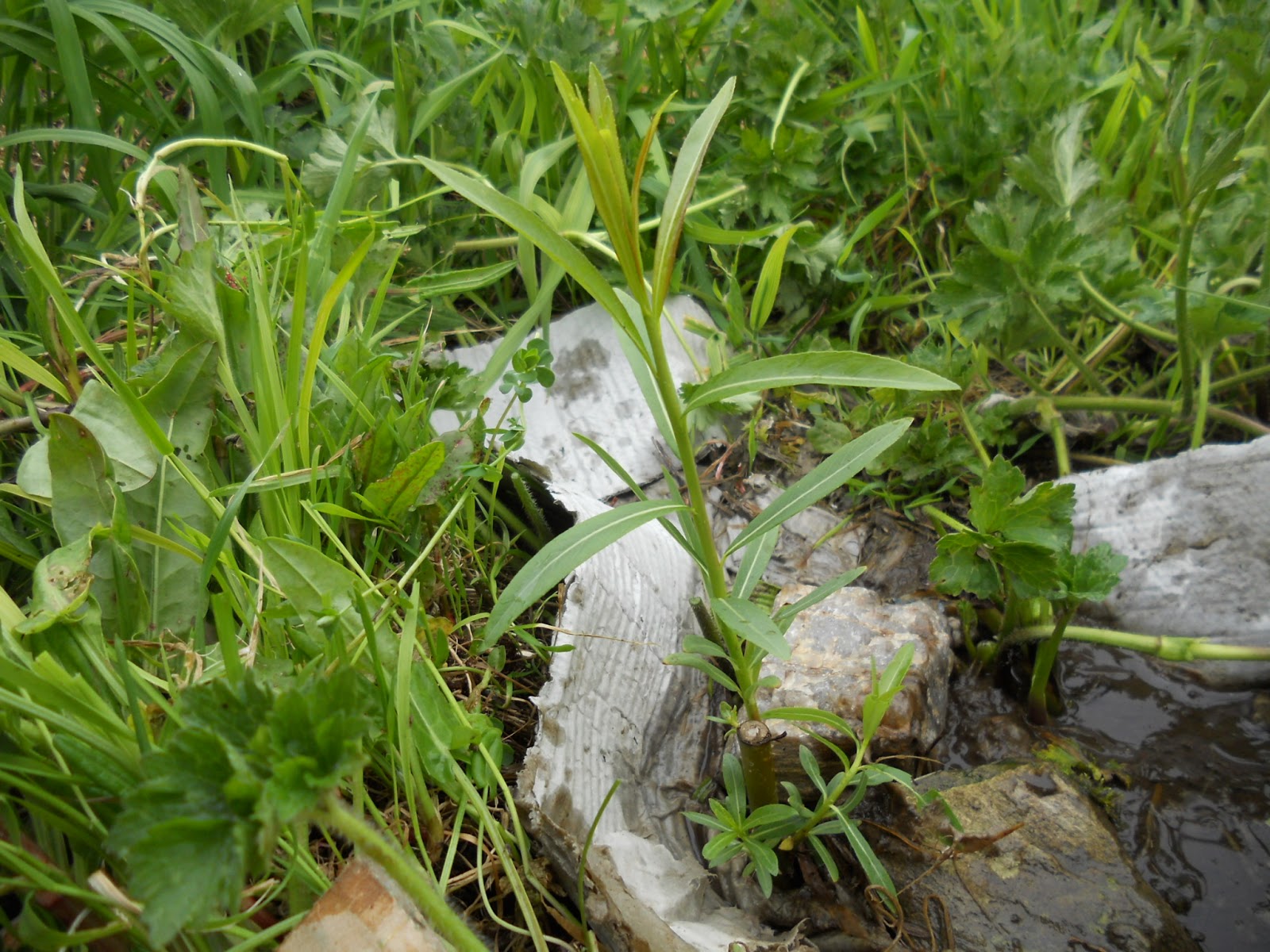
The biomass and basket willow slips we planted this winter are sprouting well but they are going to need some competing vegetation cutting back regularly until they establish fully. They are in a very wet area of land with a cardboard mulch around it but competition for the light is intense.
Chard is one of my favourite vegetables and the few plants I grew in the tyre tower over winter have given me so many delicious meals and they are just beautiful. I love this time of year.
The red currents are looking promising although they were transplanted this winter, the copious rain seems to have revitalised them. It seems to have suited the other currents and immature gooseberries are in abundance. The weather at the moment is hugely variable, hot and sunny one day, dull and cold the next but the use of my hosepipe extension is helping seeds germinate and transplants establish.
This year I am trying straw mulches around suitable plants to try to conserve water and improve the soil. Yesterday was very hot and whilst planting young basil plants between my tomatoes in an old builders sack, in our south facing courtyard, it was amazing how much difference there was between the surface of the straw and the cool moist soil beneath.
The lemon tree continues to thrive, the largest lemon has been hanging on the tree for nearly a year now and will soon be ripe enough to pick, meanwhile the tree continues to flower profusely and is covered in more lemons in varying stages of development.
The comfrey is just coming into flower, much to the delight of the bumblebees. We seem to have a huge variety of bumblebees here, small ones, some with orange bottoms, some mostly yellow. The native honeybees are completely black.
The biomass and basket willow slips we planted this winter are sprouting well but they are going to need some competing vegetation cutting back regularly until they establish fully. They are in a very wet area of land with a cardboard mulch around it but competition for the light is intense.
Chard is one of my favourite vegetables and the few plants I grew in the tyre tower over winter have given me so many delicious meals and they are just beautiful. I love this time of year.
Monday, 29 April 2013
Mixed Blessings
Sunday I woke up to a light covering of snow all around. Today it is very sunny but with gale force north easterly winds, it would be so lovely if it wasn't so cold.
My daughter Catherine has come to stay with me for the summer to give me a hand and to assume responsibility for the livestock. If she enjoys it, her stay may become permanent. She has bought an incubator with her and 12 hatching eggs, Marans and Barnvelders. Both of these breeds are utility birds and should produce meat and eggs for us. We also bought a second puppy, Toby, to keep Sam happy which Catherine will take under her wing and train. So far he has been very well behaved although Sam is exhausted with ensuring he doesn't take anything belonging to Sam. Sam being a terrier is fully in charge, and is clearly senior dog. The cats to our surprise, seem to be fine with the new addition as well.
Subscribe to:
Posts (Atom)